
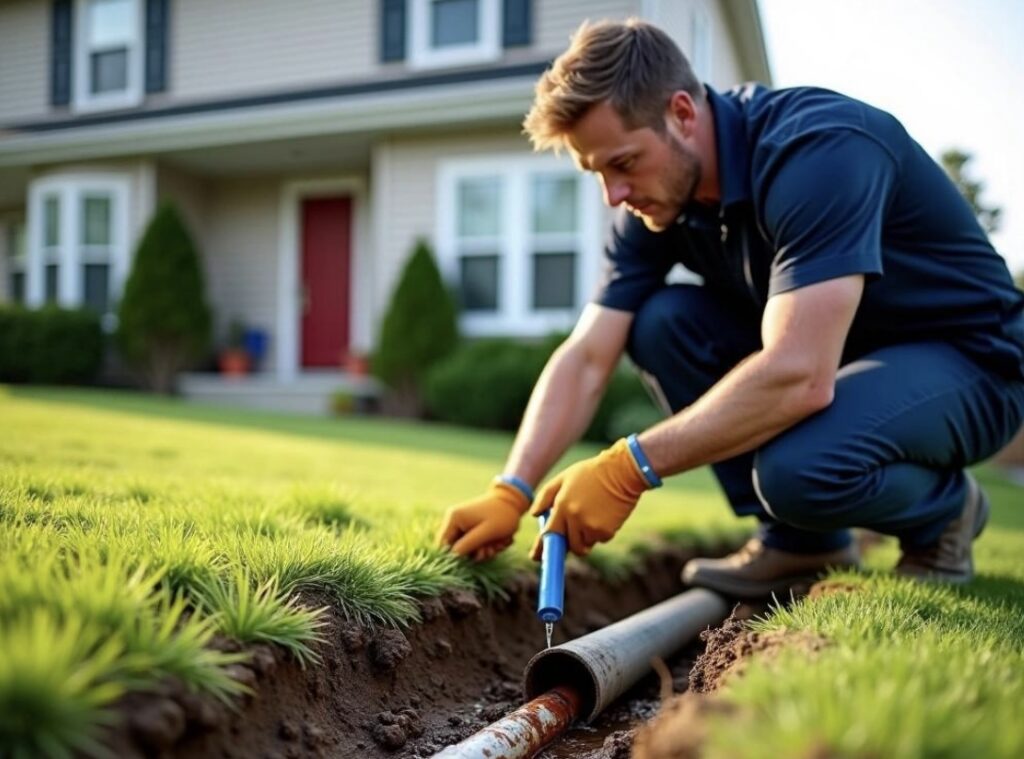
Main water line replacement becomes critical when your home’s water supply system shows signs of failure that threaten your property and safety. Reduced water pressure, discolored water, unexplained wet patches in your yard, or persistent leaks are warning signs that just need immediate attention. Then ignoring these symptoms can lead to severe water damage and contaminated water supply. We’ll help you identify when main water service line replacement can’t wait, what happens if you delay action, and how trenchless main water line replacement offers quick solutions during emergencies. DRAIN MASTER PLUMBERS understands the urgency of these situations and the importance of acting quickly to protect your home.
Critical Warning Signs That Demand Immediate Attention
Your plumbing system sends clear distress signals when the main water line starts failing. Early recognition of these warning signs can prevent catastrophic damage and expensive emergency repairs.
Sudden Drop in Water Pressure Throughout Your Home
Water pressure that drops across multiple fixtures signals a problem beyond individual taps or showerheads. Normal residential water pressure ranges between 45 and 60 PSI. Anything below 40 PSI affects daily activities, from weak showers to washing machines that take forever to fill.
A sudden pressure drop throughout your house may mean the main water line has developed a leak or blockage. Low pressure at a single fixture points to a localized issue like a clogged aerator. But when every faucet, shower, and appliance experiences reduced flow at the same time, you’re dealing with a main supply problem. Hidden leaks in the main line allow water to escape before reaching your fixtures and create system-wide pressure loss. Your water meter might run even when all fixtures are off because of this continuous water loss.
Discolored or Rust-Tinted Water from Multiple Faucets
Brown, yellow, orange, or reddish water flowing from your faucets indicates internal pipe corrosion. The problem originates in your main water line rather than individual pipes when discoloration appears at every tap in your home.
Corroded pipes release rust particles and sediment into your water supply. This contamination can include heavy metals that make the water unsafe for drinking or bathing. Rusty water isn’t just an esthetic problem. It signals that your main line is deteriorating from the inside out, and the corrosion will worsen without intervention. Watch for discoloration that persists after running water for several minutes or returns after periods of non-use.
Unexplained Wet Spots or Pooling Water in Your Yard
Persistent damp areas in your yard that remain soggy even during dry weather point to underground water line leaks. Pressurized water from a broken main line seeps upward through soil and creates these wet spots. Puddles form that never dry.
Look for patches of unusually lush or fast-growing grass and soft or muddy ground. Areas where soil feels unstable underfoot are also telltale signs. You might notice unexpected increases in your water bill that accompany these wet areas. The leak continues 24 hours a day and wastes thousands of gallons while potentially undermining your foundation.
Persistent Unusual Sounds in Your Plumbing System
Banging, gurgling, whistling, or hissing sounds in your pipes indicate pressure problems, trapped air, or leaks within your main water line. Water hammer creates loud banging when fast-moving water stops and stresses pipe joints and fittings. Gurgling sounds often signal drainage or venting issues that can relate to main line problems.
Keep in mind that occasional sounds might be normal, but frequent or persistent noises just need professional attention. A hidden leak in your main line is likely responsible if you hear running water when all fixtures are turned off.
DRAIN MASTER PLUMBERS can perform a full picture assessment and determine whether main water service line replacement is necessary if you notice any of these warning signs.
What Happens When You Delay Main Water Line Replacement
Postponing action after spotting these warning signs creates a cascade of serious problems. Delaying main water line replacement puts your property, health, and essential utilities at risk.
Property Damage from Uncontrolled Water Leaks
Uncontrolled leaks from failing water lines cause structural damage to your home. Water soaking into building materials weakens foundational structures over time. Persistent moisture guides expansion, contraction, and degradation of concrete and wood supports. Water escaping into your yard contributes to soil erosion, destabilizes ground around your property, and damages local vegetation. Most homeowners insurance policies exclude coverage when water line breaks result from age, wear and tear, or corrosion. You bear full financial responsibility when deterioration causes the failure.
Health Risks from Contaminated Water Supply
Broken pipes allow harmful bacteria and pollutants to enter your water supply. Cracks in deteriorating lines permit fecal indicator bacteria and human viruses from surrounding soil to infiltrate your system. Studies show associations between pipe breaks and gastrointestinal illness. Children under five are most vulnerable. Contaminated water can introduce E. coli and other pathogens that cause severe illness. Young children, elderly people, and those with compromised immune systems face the greatest health threats from contaminated supply lines.
Complete Loss of Water Service
Deteriorating main lines fail completely, leaving you without water access. Water utilities issue boil water notices following breaks, accounting for over half of all advisories. Service restoration can take anywhere from 24 to 72 hours depending on repair complexity.
Damage to Surrounding Underground Utilities
Excavation required to access your failed water line risks damaging nearby underground infrastructure. Water and sewer systems account for much of excavation-related utility damages. DRAIN MASTER PLUMBERS uses trenchless main water line replacement methods that minimize excavation and protect surrounding utilities.
When to Call DRAIN MASTER PLUMBERS for Emergency Assessment
Certain scenarios require immediate professional evaluation from DRAIN MASTER PLUMBERS rather than attempting DIY solutions or waiting for conditions to worsen.
You Notice Multiple Warning Signs at Once
Several symptoms appearing at the same time mean the problem extends beyond isolated fixture issues. Multiple plumbing fixtures failing together often point to main line blockages or pressure regulation failures that require system-wide diagnostics. If discolored water, reduced pressure and unusual sounds occur together, your main water service line replacement needs immediate assessment.
Your Water Line is Over 50 Years Old
Galvanized steel pipes from homes built before the 1960s should be replaced due to corrosion risk. Poly Butylene piping installed between the 1970s and early 1990s lasts only 10 to 15 years after installation. Age alone makes these materials candidates for replacement, even without visible problems.
Recent Ground Shifting or Construction Near Your Property
Soil movement from seismic activity, heavy rainfall or nearby construction puts immense stress on underground pipes. Ground shifting causes cracks, disconnections or complete collapses in water lines. Tree root intrusion and decades of ground movement contribute to buried pipe failures as well.
Recurring Leaks Despite Previous Repairs
Repeated failures in the same pipe section indicate ongoing ground stress rather than poor workmanship. The entire line needs replacement when DRAIN MASTER PLUMBERS finds the same location requiring repair every year or two.
How Trenchless Main Water Line Replacement Solves Urgent Problems
Trenchless main water line replacement offers DRAIN MASTER PLUMBERS a modern approach to solving urgent pipe failures without the traditional excavation methods that destroy your property.
Fast Installation Without Major Excavation
Trenchless methods require only two small access points to complete the whole replacement. You won’t need long trenches dug through your yard. The process uses specialized techniques like pipe bursting, which fractures the old pipe outward while pulling in a new HDPE pipe, or CIPP relining, which inserts an epoxy-saturated liner to create a smooth pipe within your existing line. Most residential projects finish within one day. Traditional excavation requires several days or even weeks, but trenchless technology completes the work in hours.
Minimal Disruption During Emergency Situations
Service restoration happens the same day for most installations. DRAIN MASTER PLUMBERS creates only one to two small access holes with no major restoration work required afterward. Your landscaping, driveway and hardscaping remain intact throughout the process. Water service returns within hours once the new pipe is installed and tested.
Long-Term Solution for Failing Water Lines
The replacement materials provide permanent solutions to failing lines. HDPE pipes and epoxy-cured liners resist corrosion and root intrusion. A trenchless water line that’s installed properly lasts 50 years or more with no ongoing maintenance required.
Conclusion
Main water line failure creates emergencies that just need immediate action. The warning signs we’ve covered require professional assessment before small problems become catastrophic failures. Delaying replacement risks your property and water access.
DRAIN MASTER PLUMBERS offers trenchless solutions that restore your water service quickly without destroying your yard. Contact us for an emergency assessment that protects your home and family when you notice multiple warning signs or your line exceeds 50 years old.