
The timing of your call to a plumber for sewer line problems separates a simple fix from a disaster that gets pricey. Many homeowners struggle with this decision and remain unsure whether their symptoms require immediate attention or can wait a few days. Early warning signs that get ignored often result in emergency situations that timely intervention could have prevented.
We’ve seen at DRAIN MASTER PLUMBERS how proper timing makes all the difference in sewer repair outcomes. This piece will guide you through the early symptoms of sewer line trouble and help you distinguish between emergency and non-emergency situations. We’ll explain why delaying sewer line service creates bigger problems and show you what steps to take when you need a plumber for sewer line repair.
Early Symptoms of Sewer Line Trouble
Slow Draining Throughout Your Home
Water backs up in multiple fixtures at the same time. You’re dealing with more than isolated clogs. Your bathroom sink fills with foam while you brush your teeth. That same morning, your shower pools around your ankles. This pattern points to one shared problem: your main sewer line.
The main sewer line is the single pipe that every drain in your home feeds into. A blockage or damage develops, and wastewater hits a bottleneck. It backs up into your lowest fixtures first. Watch for water rising in a first-floor tub when you flush an upstairs toilet. Gurgling sounds from drains when water runs elsewhere are another sign. Tree roots grow through small cracks. Grease buildup narrows the pipe over time. A cracked section underground can cause these problems.
Unpleasant Smells That Won’t Go Away
Persistent sewage odors inside your home signal that sewer gasses are escaping where they shouldn’t. A blocked or damaged sewer line prevents wastewater from flowing as it should. This leads to leaks or backups that release distinct sewage smells throughout your house.
Sewer gas contains hydrogen sulfide. It can cause headaches and nausea. These odors indicate serious plumbing problems beyond health concerns. Dry P-traps allow gasses to rise through drains. Blocked vents force odors back into your home instead of outside. Multiple drains emit foul smells or the odor persists after simple fixes. You need a plumber to inspect the sewer line.
Changes in Your Lawn or Foundation
Outdoor warning signs often reveal hidden sewer line damage before indoor symptoms appear. Wet spots or soggy patches in your yard during dry weather indicate wastewater escaping underground. The telltale sign of a sewer leak: your yard smells like rotten eggs or worse.
Unusually green, thick grass in specific patches means sewage is acting as fertilizer beneath the surface. You might also notice soft ground or small sinkholes along your sewer line path. Foundation cracks near plumbing areas can develop when leaking sewage saturates soil under your home.
Unusual Noises from Your Plumbing System
Gurgling sounds from toilets or drains when water runs elsewhere indicate trapped air in your system. Your main sewer line develops a blockage. Air cannot vent as it should and creates these bubbling noises.
Listen for continuous trickling sounds when no water is running. Pay attention to lower-level walls or floors. DRAIN MASTER PLUMBERS finds that these sounds often mean a cracked pipe is leaking after major fixtures drain. Hissing or whistling from drains points to blocked vents restricting airflow.
Emergency Sewer Situations vs. Problems That Can Wait
At the Time You Need Same-Day Sewer Repair
Sewage backing up into your home requires professional help right away. Stop using all water the moment wastewater flows backward through floor drains, toilets, or showers. Raw sewage contains harmful bacteria that create serious health risks for your family. Multiple fixtures backing up at the same time signals a main sewer line blockage that won’t resolve on its own.
Active flooding demands urgent attention whether it comes from a burst pipe, sewer backup, or failed sump pump. Water spreading through your basement can damage flooring, drywall and belongings within hours. You need emergency sewer plumbing assistance if you cannot stop the water flow with a simple shutoff valve.
Complete loss of drainage throughout your home means calling a plumber for sewer line repair right away. A serious blockage or pipe collapse is preventing wastewater from leaving your property at the time no drains work or they all back up quickly.
Issues You Can Schedule Within a Few Days
A single slow-draining sink or tub without foul odors indicates a localized clog rather than a sewer line emergency. You can schedule sewer line service within a few business days if other fixtures drain fine.
One clogged toilet means an isolated blockage at the time other toilets function fine. Occasional gurgling from a single drain without backup or sewage smell needs attention but not middle-of-the-night urgency.
Red Flags That Mean Call Now
DRAIN MASTER PLUMBERS prioritizes these situations: sewage coming through basement drains, water or waste rising in multiple fixtures at once, strong sewer gas odors throughout your home and visible sewage pooling in your yard or basement. Sinkholes or ground collapse near your sewer line path indicate major pipe failure requiring inspection right away. Stop all water use before we arrive, keep family and pets away from affected areas and clear access to your sewer cleanout if possible.
Why Waiting Too Long Makes Things Worse
How Small Problems Become Major Repairs
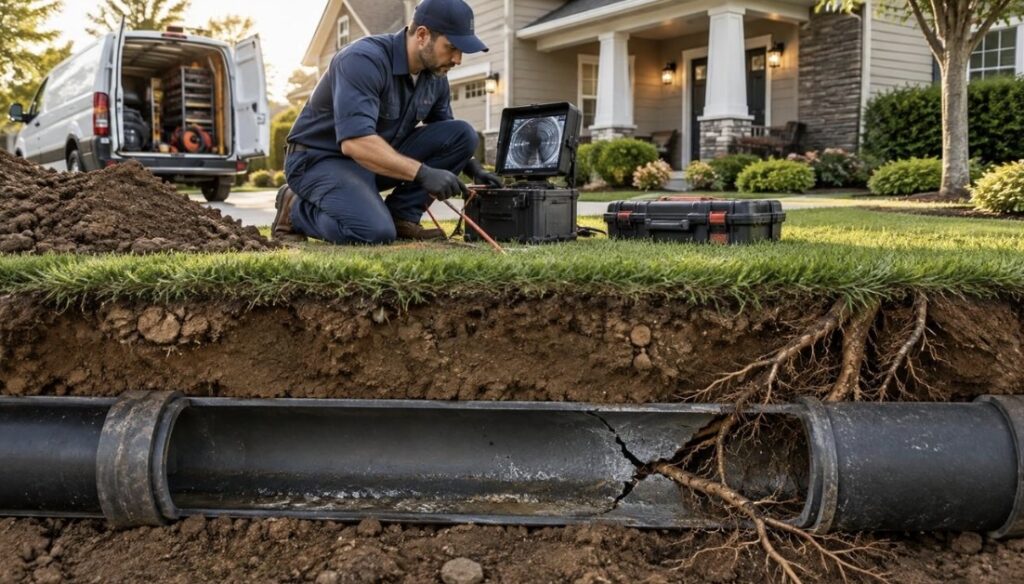
Sewer line damage follows a predictable escalation pattern. A small crack in your pipe allows tree roots to enter. Once inside, they expand like a net and trap debris to create blockages. What starts as slow drainage becomes a complete blockage that requires extensive excavation. At DRAIN MASTER PLUMBERS, we see how minor cracks turn into collapsed pipes when homeowners delay calling a plumber for sewer line repair. Underground leaks wash away soil beneath your foundation, so what could have been a simple sewer repair transforms into major structural work.
Health Risks from Untreated Sewer Issues
Raw sewage exposes your family to E. coli, salmonella and hepatitis A. These pathogens cause gastrointestinal infections and respiratory issues. Damaged sewer lines release hydrogen sulfide, methane and ammonia into your home. This leads to dizziness and nausea, and can cause unconsciousness in severe cases. Mold begins growing within 24-48 hours when sewer leaks create moisture. Children, elderly family members and those with compromised immune systems face the highest risk from untreated sewer plumbing problems.
Property Damage That Develops Over Time
Sewage leaks saturate soil around your foundation and cause erosion that leads to settlement cracks and structural instability. Wastewater seeps underground and washes away supporting soil, which creates voids beneath your slab and causes uneven foundation settling. You may see warped floors, ruined drywall and damaged finishes from repeated moisture exposure. Sinkholes can develop where soil has eroded away. The longer sewer line service is delayed, the more ground becomes unstable beneath driveways and walkways.
Steps to Take When You Need Sewer Line Service
What to Do Before the Plumber Arrives
Stop using all water in your home to prevent additional backup. Locate your main water shutoff valve and turn it off if flooding is active. Clear pathways to your basement, crawl space, or yard cleanout locations. Move furniture, boxes and valuables away from work areas. Use towels and buckets to contain visible water and protect flooring.
How to Describe Your Problem
Contact DRAIN MASTER PLUMBERS and mention which fixtures are affected, the time symptoms started, and whether multiple drains show problems at once. Note any unusual smells, gurgling sounds or outdoor wet spots. Share any recent plumbing work or recurring issues that keep returning.
Finding Qualified Sewer Repairs Near Me
Look for licensed professionals with camera inspection equipment and sewer line experience. Verify they can diagnose problems using video technology rather than guessing. Check that they explain your repair options and follow local building codes.
What Happens During the Service Call
Your plumber for sewer line repair will insert a waterproof camera through your cleanout to inspect the pipe. The camera reveals blockages, cracks, root intrusion and pipe material condition. After inspection, the technician explains findings and recommends appropriate solutions.
Preventive Measures After Repair
Schedule routine sewer line service annually if tree roots caused your blockage. Don’t pour grease down drains and flush only items that disintegrate quickly. Professional maintenance prevents recurring problems and extends your repaired system’s lifespan.
Conclusion
Early recognition of sewer line warning signs makes all the difference between simple repairs and major damage. Therefore, act when you notice multiple slow drains, persistent odors, or outdoor wet spots. These symptoms won’t resolve themselves and will only worsen with time.
After all, your home’s safety and structural integrity depend on a functioning sewer system. Contact DRAIN MASTER PLUMBERS at the first sign of trouble to protect your property and family from preventable damage